
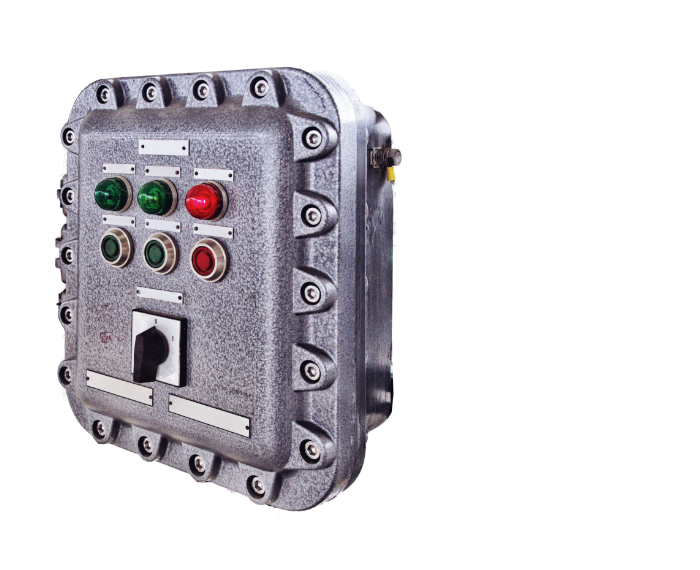
Explosion-proof panels: a comprehensive guide to safety in classified areas
Industrial environments where explosive atmospheres can form require equipment specifically designed to ensure the safety of both facilities and operators. Explosion-proof enclosures play a crucial role in preventing explosion hazards associated with electrical equipment in these hazardous areas. Learn what you need to know about how they work, the different types available, and their applications in industrial settings.
What is an explosion-proof panel?
An explosion-proof enclosure is an electrical cabinet designed to contain an internal explosion without allowing it to spread to the outside. These enclosures are manufactured to strict standards to ensure high mechanical strength, thereby preventing any explosion from occurring in the immediate vicinity.
The design typically relies on the use of durable materials such as stainless steel or cast aluminum, as well as waterproof gaskets to hermetically seal the housing.
The three main types of explosion-proof panels
What is an explosion-proof panel?
There are three main types of explosion-proof panels, each designed to meet specific needs:
- Explosion-proof panels, which contain any internal explosion within a reinforced enclosure.
- Intrinsically safe panels, which limit electrical energy to prevent sparks that could trigger an explosion, are suitable for low-level signals.
- Pressurized panels (Purged and Pressurized), which maintain positive pressure inside to prevent the entry of flammable gases or dust.
Each type offers a solution tailored to the nature of the classified area and the technical requirements of the project.


Applicable standards and classifications
To ensure safety, explosion-proof panels must comply with internationally recognized standards:
- NEC (National Electrical Code) / CEC (Canadian Electrical Code): define the classes (I, II, III) and divisions (1, 2) of hazardous locations.
- UL 1203 and 698A and CSA C22.2: standards for the construction of explosion-proof equipment.
- ATEX (Europe) and IECEx (international): standards for the design and certification of equipment for use in explosive atmospheres.
The classification of zones depends on the type of flammable substances present:
- Class I: Flammable gases and vapors
- Class II: combustible dust
- Class III: flammable fibers
Divisions:
- Division 1: Hazardous atmosphere present under normal conditions
- Division 2: Hazardous atmosphere present only in the event of a failure
Differences between explosion-proof and intrinsically safe equipment
It is important to distinguish between explosion-proof panels and equipment known as “intrinsically safe”:
| Requirement | Explosion-proof | Intrinsic safety |
|---|---|---|
| Principle | Containing a mechanical explosion | Limit electrical power to prevent ignition |
| Usage | High currents and high power | Weak signals and instruments |
| Benefits | Durable, suitable for heavy loads | Lightweight, economical, easy to install |
| Disadvantages | Heavier, higher cost | Limited to low power levels |

Installation and use of intrinsic barriers
Intrinsic barriers are electronic devices that transmit electrical signals to classified areas while limiting the power to a safe level. They must be installed in non-classified areas (where there is no explosive atmosphere) and connected to certified equipment in hazardous areas.
This system is essential when sensors, buttons, or detectors need to communicate with control systems located outside restricted areas.
Applications of explosion-proof panels
- Pumping stations in the oil and gas industry
- Chemical and pharmaceutical plants
- Distilleries and Alcohol Production
- Facilities for the processing and storage of flammable products
- Grain silos and agricultural sites exposed to combustible dust
- Control stations in underground mines
Best practices and common mistakes to avoid
- Use only components certified for the relevant area
- Follow the manufacturer’s installation instructions
- Never modify a sign without regulatory approval
- Ensure adequate heat dissipation to prevent overheating
- Perform regular inspections and preventive maintenance
Advantages of in-factory manufacturing and approval
The manufacture of explosion-proof panels in a certified factory allows for:
- Rigorous quality control throughout the manufacturing process
- Validation and approval of the signs prior to delivery
- Eliminating the need for additional on-site validations, thereby reducing installation time and costs
- Guaranteed compliance with current standards
Conclusion
Explosion-proof panels are essential for ensuring safety in areas with explosive atmospheres. Their design, manufacture, and installation must comply with very strict standards in order to protect people, property, and the environment.
For any installation in a regulated area, it is crucial to work with specialists who can provide certified equipment manufactured under controlled conditions and compliant with local and international regulatory requirements.