
Scada
Programming
First, for those unfamiliar with the term, SCADA (Supervisory Control and Data Acquisition) programming is a software development process that involves creating applications to control and monitor complex industrial systems (situation awareness). It is through this technology that Cyr controls and monitors your industrial processes. This allows you to perform more accurate diagnostics on your operations. This is made possible, in part, by artificial intelligence, which is a key ally in the equation.
What sets us apart,
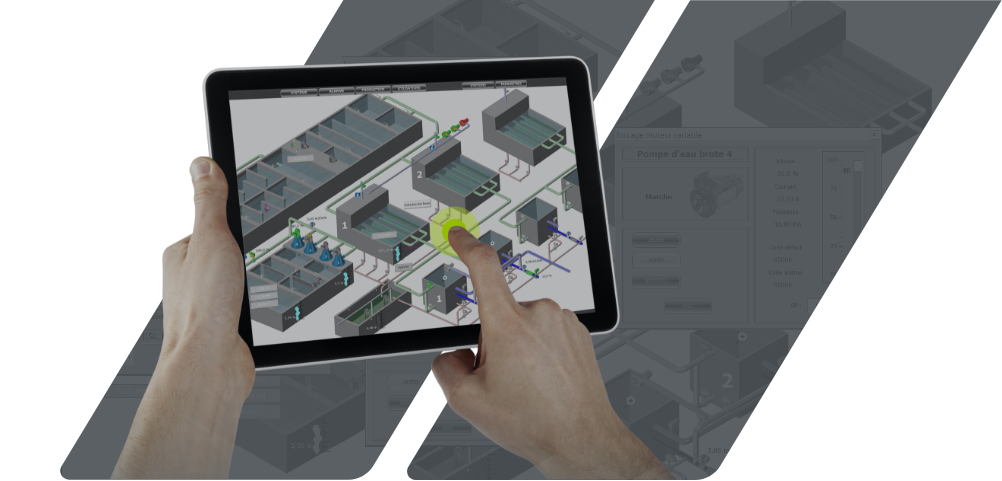
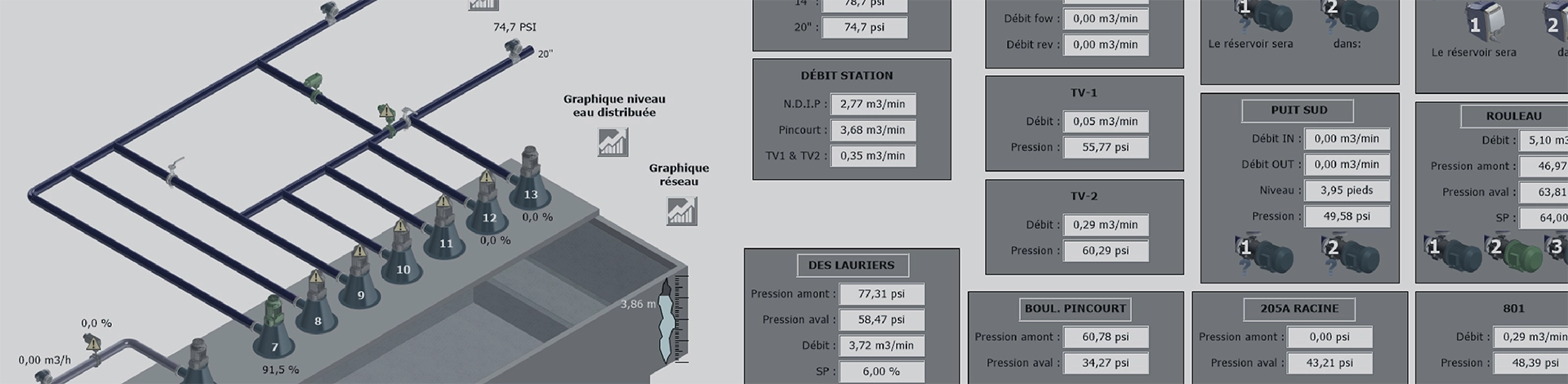
A pioneer in Quebec (among automation companies) in SCADA systems, Cyr offers extensive compatibility with all types of PLCs to extract key performance indicators and monitor and analyze your production. Our spectacular 3D visuals are based on the “Situational Awareness” standard, ensuring a clear and standardized interface. Our solutions integrate Visu+, Insight, Intouch, Ignition, Aveva, Scadapack, and artificial intelligence to maximize your efficiency.
Here is an overview of our SCADA approach
when we take over management of your systems.
Please note that it is important to mention that Cyr (automation companies) evaluates your project with a long-term perspective, which allows us to ensure greater process flexibility (situational awareness).
Understanding and Defining Needs
Understand the functional and operational requirements of the system to be controlled and monitored. This may include collecting data from sensors, controlling actuators, monitoring processes, etc. We will then be able to design the software architecture of the SCADA system, including the hierarchy of components such as servers, clients, human-machine interfaces (HMIs), databases, etc.
Determine customer standards
Configure hardware devices such as sensors, actuators, and programmable logic controllers (PLCs) to communicate with the SCADA system. In addition, the appropriate communication protocols must be defined. The purpose of this is to ensure the efficient exchange of data between the various system components and to establish system security measures.

2D/3D Visualization
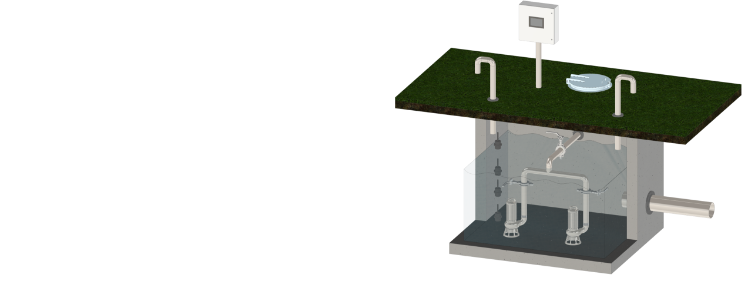
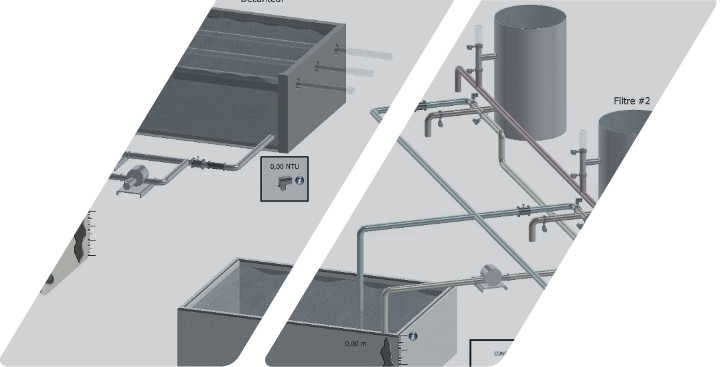
Next, we need to create a visual representation that accurately reflects the client’s requirements and systems—actions, components, states, and so on. The goal is to make the process easy for the operator to understand and to validate our deliverable.
Development and
integration of
SCADA applications
Program SCADA applications to control industrial processes, monitor real-time data, generate alarms in the event of abnormal conditions, and more. Integrate advanced features such as data history, trends, reports, and custom user interfaces. These features can help analyze system performance. In addition, they are used to make informed operational decisions, particularly through the use of artificial intelligence in the applications.
Implementation and deployment
Conduct comprehensive testing to verify that the SCADA system operates as intended and meets the specified requirements. This may include user interface testing, communication testing, reliability testing, security testing, and so on.
Maintenance et support
Finally, it is essential to provide staff training on how to use the system and offer ongoing technical support to resolve any issues and optimize performance. Implement a regular maintenance plan to ensure the SCADA system operates smoothly (automation companies). Monitor market trends and technological advancements to identify opportunities for system improvement and evolution.
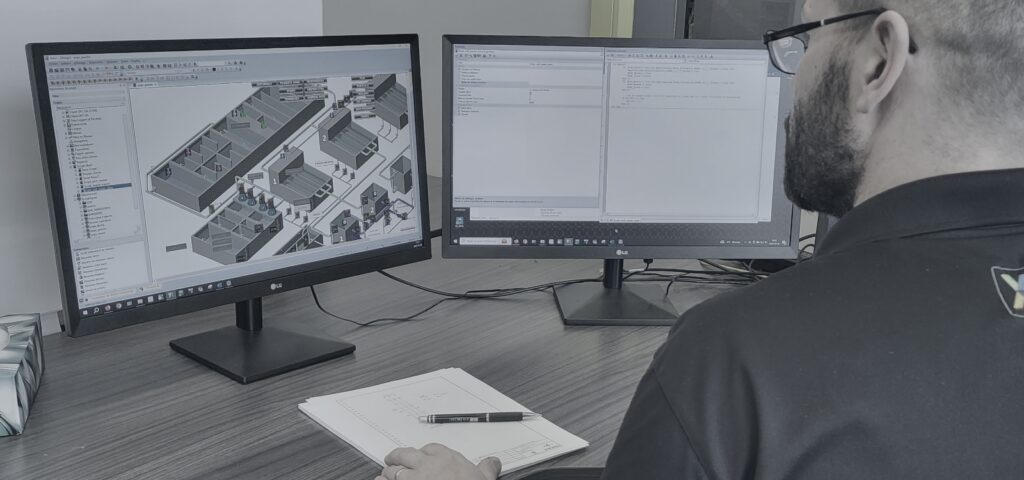
There’s no doubt that implementing a SCADA system is a game-changer for a company looking to push its boundaries. It ensures that existing operations are optimized and helps identify gaps in your productivity.
Taking control of your performance is not a luxury.
Treat yourself to robust and efficient SCADA systems to control and monitor your industrial processes.