
Explosion-proof panels
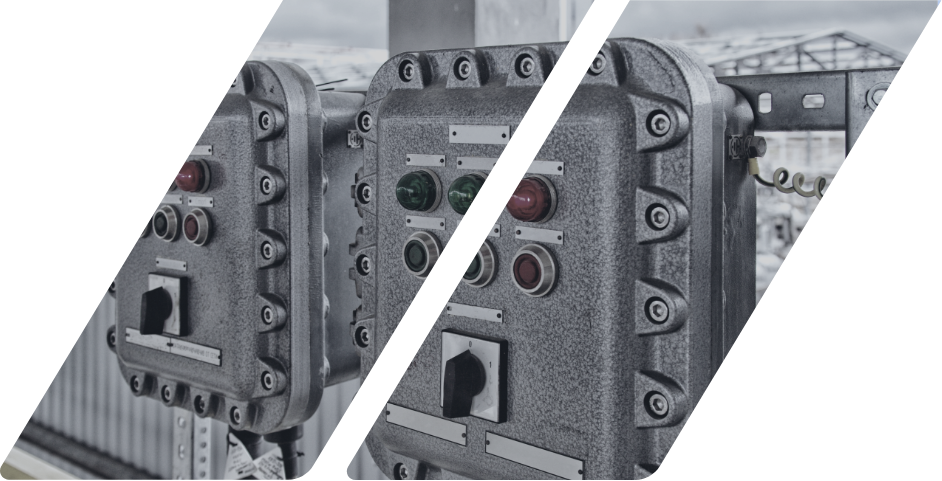
Cyr Système assists you in analyzing your environment and handles the design and manufacture of your explosion-proof panel in compliance with UL 698A (NRBX), CSA C22.2 No. 157, and NNC Division 1 and 2 standards.
First, the goal of installing explosion-proof electrical enclosures is to ensure effective control and management of your operational processes in ATEX zones. To ensure the safety and reliability of these panels, it is crucial to adhere to strict manufacturing and design standards in order to effectively protect people and facilities from the risks of fire and explosion.

What sets us apart,
Cyr Système also holds a rare certification to manufacture explosion-proof enclosures that are UL, ATEX, CSA C22.2 No. 157, NNNY, NNNY7, and NRBX7 certified, making them ideal for ATEX zones.
We also offer the following for your explosion-proof panels:

Intrinsic technology
Explosion-proof enclosures equipped with intrinsic safety barriers, providing protection against sparks in ATEX zones.

Positive pressure technology
Explosion-proof enclosures that incorporate air-venting systems to prevent the ingress of flammable gases,

Insulation technology
Rugged (explosion-proof) enclosures to ensure safety in ATEX zones.

1st use case
Intrinsic barriers
In addition, here are a few situations where the use of intrinsic barriers is justified:
Explosive environments
First, intrinsic safety barriers must be installed in non-hazardous areas to safely transmit signals to hazardous areas. They are designed to limit electrical energy and prevent a spark from triggering an explosion in ATEX zones.
Industrial Process Safety
They are also used to ensure the safety of industrial processes involving flammable or explosive substances by limiting the electrical power supplied to a safe level.
Protection of equipment and people
Intrinsic safety barriers ensure that electrical circuits cannot generate enough energy to cause an explosion, thereby protecting both equipment and people working in these environments.
Regulatory Compliance
Furthermore, in many jurisdictions, the use of intrinsic safety barriers is a regulatory requirement to ensure employee safety and environmental protection in high-risk industries.
Reliability and durability
In addition, these barriers are designed to be reliable and durable in harsh conditions, providing consistent protection even in extreme environments.
In summary, intrinsically safe barriers are used whenever it is necessary to minimize the risk of explosion or fire in ATEX zones. They are essential for ensuring the safety of people, equipment, and the environment.
2nd use case
Standard industrial panel with a pressurized purge system
A standard panel with a pressurized purge system is typically used in environments where flammable gases or vapors may be present, but where a completely safe atmosphere is not required at all times. Here are some situations where the use of this type of panel may be appropriate:
Areas with occasional risk
Admittedly, in some environments, the presence of flammable gases may be intermittent rather than constant. In such cases, a standard industrial panel with a pressurized purge system can be used to ensure safety when the risk is present, without requiring extreme safety measures at all times.
Operational flexibility
In addition, certain industrial processes may require the use of flammable gases or vapors only at specific stages. An industrial panel with a pressurized purge system provides operational flexibility by allowing the use of these substances when necessary, while ensuring safety during periods of inactivity.
Cost reduction
Compared to fully enclosed or hermetically sealed systems, a standard panel with a pressurized purge system can be more cost-effective to install and maintain. This solution offers a particular advantage when the risk of exposure to flammable gases is relatively low or is limited to specific areas of the facility.
Regulatory Compliance
In some cases, regulations require specific safety measures to minimize the risks associated with the presence of flammable gases. An industrial panel with a pressurized purge system can meet these regulatory requirements while offering a more flexible and cost-effective solution than other options.
In summary, a standard industrial panel with a pressurized purge system is used in situations where flammable gases may be present but not constantly, offering a balance between safety, operational flexibility, and cost.


3rd use case
Thick explosion-proof panels
Explosion-proof enclosures are used in environments where there is a high risk of explosion from flammable gases, vapors, or dust. Here are a few situations where their use is warranted:
Areas classified as potentially explosive
For this reason, these panels are used in areas where flammable substances—such as gases, vapors, or dust—may be present in sufficient quantities to cause an explosion in the presence of an ignition source. These areas are often referred to as “explosion-hazard zones” and are classified based on the likelihood of an explosive atmosphere forming.
Chemical and petrochemical industries
It is true that the handling and processing of flammable substances frequently expose chemical and petrochemical facilities to explosion risks. However, thick explosion-proof panels are used to ensure the safety of electrical systems in these environments.
Refineries
The handling of large quantities of flammable products exposes oil refineries to a high risk of explosion. That is why panels designed to withstand such explosions (explosion-proof panels) are essential for ensuring the safety of electrical operations at these facilities.
Mines and quarries
In the mining industry, combustible dust can be present in quantities sufficient to pose an explosion hazard. As a result, explosion-proof enclosures are used to protect electrical systems in these hazardous environments.
Offshore platforms
The presence of flammable gases and liquids also exposes offshore hydrocarbon production facilities to explosion hazards. Explosion-proof electrical panels are used to ensure the safety of electrical operations under these extreme conditions.
In summary, industries with a high risk of explosions involving flammable gases, vapors, or dust use heavy-duty explosion-proof electrical panels. In other words, their use is essential to ensuring the safety of electrical systems in these ATEX zones.
We divide these into several sections as follows:
| Class & Divisions System (Canada & US Only) | |
|---|---|
| Class I | Flammable gases, vapours or liquids |
| Class II | Combustible dusts |
| Class III | Ignitable fibres and flyings |
| Groups | ||
|---|---|---|
| Class I | Class II | Class III |
| A – Acetylene | E – Metal Dust | None specified |
| B – Hydrogen | F – Coal Dust | |
| C – Ethylene | G – Grain Dust | |
| D – Propane | ||
| Zone | Hazardous areas are classified into Zones based upon the frequency of the occurrence and duration of an explosive gas/dust atmosphere, as follow: | |
|---|---|---|
| Gas | Dust | |
| 0 | 20 | A potentially flammable atmosphere is present continuously or for long periods or frequently. |
| 1 | 21 | A potentially flammable atmosphere is likely to occur in normal operation occasionally. |
| 2 | 22 | A potentially flammable atmosphere is not likely to occur in normal operation but, if it does occur, will persist for a short period only. |
| Type of area | Divisions | Zones | Definition |
|---|---|---|---|
| Continuous hazard | 1 | 0, 20 | A place in which a PFA is continuously present. |
| Intermittent hazard | 1 | 1, 21 | A place in which a PFA is likely to occur in normal operation. |
| Abnormal hazard | 2 | 2, 22 | A place in which a PFA is not likely to occur in normal operation, but may occur on short periods. |
| Both Canada and the US are making greater use of the Zone system | |||
The type of environment in which you work determines the classifications or standards, which are established according to the following rules:
Classes
In fact, they create the kind of conditions that can cause an explosion.
Class I
which refers to areas containing flammable gases, vapors, or liquids
Class II
which refers to locations containing combustible dust
Class III
which refers to areas containing highly flammable fibers or dust
The divisions
They are used to determine whether potentially hazardous substances are present continuously or intermittently, depending on the environment.
Division I
This refers to areas where flammable concentrations of any of the hazardous materials listed above are present under normal operating conditions. It also includes areas where such hazardous materials may be generated or introduced by other activities, such as routine maintenance, repairs, or equipment malfunctions.
Division II
This is where flammable concentrations of the hazardous materials listed above exist only under abnormal operating conditions.
It is also possible for a location to be “unclassified,” which applies to areas where electrical zone classification is not required because the presence of hazardous materials is very rare.
The groups
They are used to determine whether potentially hazardous substances are present continuously or intermittently, depending on the environment.
Class 1 (flammable gases, vapors, and liquids)
Group A: acetylene
Group B: hydrogen, butadiene, ethylene oxide, propylene oxide, and acrolein
Group C: ethylene, cyclopropane, and ethyl ether
Group D: acetone, ammonia, benzene, butane, ethanol, gasoline, hexane, methane, methanol, naphtha, natural gas, propane, and toluene
Class II (combustible dust)
Group E: combustible metal dusts, such as aluminum, lithium, and commercial titanium and magnesium alloys
Group F: combustible carbonaceous dusts, such as carbon black, charcoal, coal, and coke dust
Group G: other types of combustible dusts, such as chemicals, flour, grains, starch, plastic, and wood
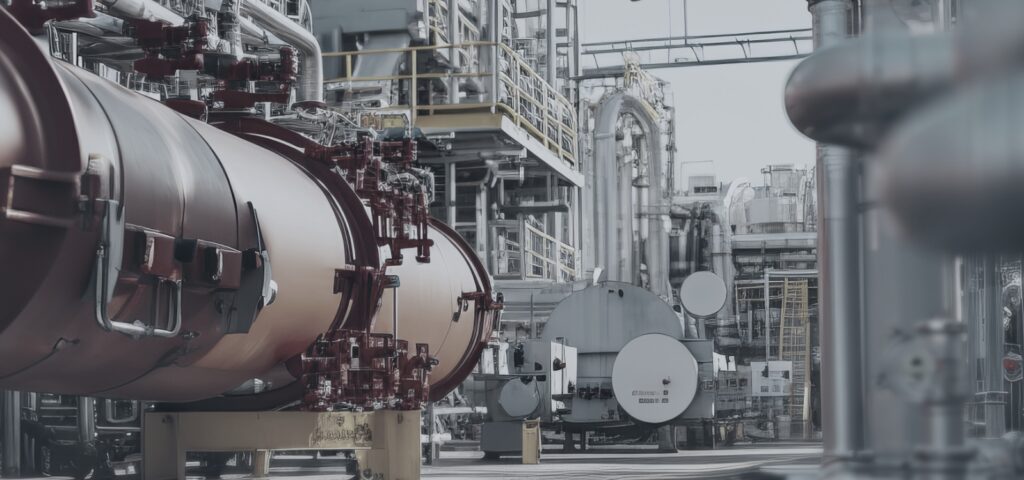
In fact, ensure effective control and management of your operational processes whilemaking your operations safe (explosion-proof).
Check out more content about explosion-proof panels on our blog!
-
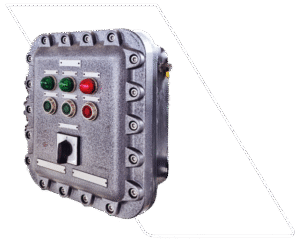
Explosion-proof panels: everything you need to know
Read the article: Explosion-proof panels: everything you need to know